
As women transition through perimenopause and menopause, their bodies undergo profound hormonal shifts. Hormones are essential chemical messengers that work together like instruments in an orchestra. Each hormone plays a unique role. Their intricate interactions ensure the body operates in harmony. These interactions maintain overall balance and health. This goes beyond just growth and reproduction. Hormones regulate metabolism, immunity, detoxification, brain function, and cardiovascular health.
As women age, key protective hormones fluctuate and decline, whilst others increase, including cortisol. This adversely impact all aspects of women’s health, including the increased risk for developing autoimmune disease and cancer.
The following are some examples of changes in hormones, as women age:
- FSH & LH – Increase with age as the body compensates for declining estrogen and progesterone.
- Estrogen & Progesterone – Decline, with numerous deleterious effects including but not limited to conditions such as osteoporosis, cardiovascular disease, and cognitive decline.
- Testosterone – Although initially declining, research suggest levels in some may rise after age 70.
- Melatonin – Declines, not only affecting sleep cycles and stress resilience, but also out the bodies defense and healing mechanisms.
- Growth Hormone & IGF-1 – Decrease, leading to muscle loss and metabolic slowdown.
- DHEA – Declines, affecting energy, immunity, and cognition. This can also affect the availability of of other hormones such as testosterone.
- Cortisol – levels naturally rise with age.
Balance is the key. Having too much can be as detrimental as not having enough.
Understanding these hormonal changes is essential. With reduced ovulation, less progesterone is made and so levels of progeterone tend to decline first in most women.
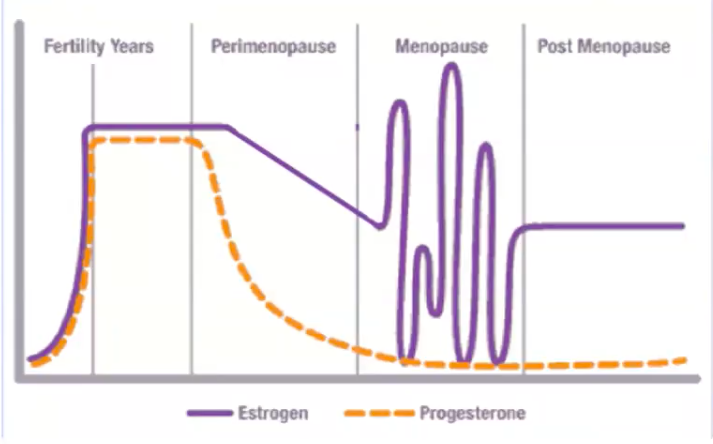
Its important to understand what further accelerates this decline in progesterone in some women, creating a more oestrogen dominance and conditions such as fibroids, PMS/PMDD, endometeriosis. This requires a deeper understanding of what influences our hormones, the systems they support, and how to keep them all in balance.This is why an integrative approach is essential. It is necessary for maintaining optimal health, reducing chronic disease risk, and enhancing longevity.
The Impact of Hormonal Shifts on Healthspan
These shifts contribute to:
| Metabolic changes | Increased fat accumulation, insulin resistance, and a higher risk of diabetes and obesity. |
| Immune system alterations | Greater susceptibility to autoimmune diseases and inflammatory conditions. |
| Cognitive challenges | Higher risks of brain fog, anxiety, depression, and neurodegenerative diseases. |
| Detoxification inefficiencies | Slower elimination of toxins, making women more sensitive to environmental stressors. |
| Cardiovascular risks | A sharp increase in heart disease risk post-menopause due to changes in estrogen levels. |
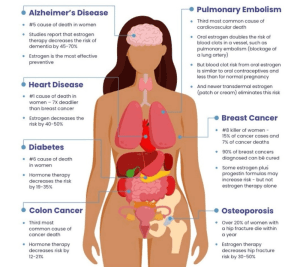
Declining estrogen and progesterone levels impact more than reproductive health—they influence metabolism, cardiovascular function, brain health, and immunity. These changes heighten the risk of chronic diseases, including heart disease, diabetes, osteoporosis, and neurodegenerative conditions.
For example, estrogen supports vascular health by keeping arteries flexible and reducing inflammation. As levels drop, women become more susceptible to high blood pressure and cardiovascular disease—the leading cause of mortality in postmenopausal women. Similarly, progesterone and melatonin decline, disrupting sleep cycles and increasing stress and inflammation.
While HRT can alleviate symptoms, it does not address the full spectrum of changes occurring in the body. A comprehensive strategy, incorporating targeted nutrition, stress management, gut health, and movement, is essential for long-term well-being.
Why Hormone Replacement Therapy (HRT) Alone, Is Not Enough
Hormonal imbalance is influenced not only by aging. Environmental exposures, lifestyle choices, and endocrine disruptors also play a role. Endocrine disruptors are chemicals- present in processed foods, personal care items, and household products, can mimic or block natural hormones, exacerbating imbalances.
A key component of a holistic strategy includes taking proactive steps by making lifestyle adjustments to reduce exposure. This involves stress management, gut health optimisation, opting for glass or stainless steel over plastic, using natural cleaning products. Choosing organic, when possible and supporting the body’s detoxification pathways, through nutrition and targeted supplementation.
Addressing these factors can:
Reduce chronic inflammation and prevent hormone dysregulation.
- Support gut microbiome health for improved estrogen metabolism.
- Enhance stress resilience to maintain cortisol balance.
- Ensure optimal nutrient absorption for hormonal health and longevity.
Do not assume premature ovarian failure and prescribe hormone replacement therapy (HRT) as a one-size-fits-all solution. Instead, foundational women’s wellness strategies should be prioritised.
An integrative medicine approach:
✔ Supports long-term hormonal balance
✔ Reduces chronic disease risks
✔ Enhances longevity and vitality
The goal isn’t just symptom relief—it’s optimal, thriving health.

Integrative Strategies for Women’s Health and Hormone Balance
At PrecivaHealth, we advocate for an evidence-based approach that integrates functional & metabolic medicine approach, to assess the whole-person. This method ensures all aspects of well-being are addressed:
1. Optimising Nutrition, Gut & Liver Health for Hormonal Balance
- Tailored dietary strategies to optimise metabolism and hormone balance.
- Support for gut health & microbiome diversity to improve immune function and estrogen metabolism.
- Targeted nutraceuticals & supplements to replenish key nutrients lost due to hormonal shifts.
2. Stress & Sleep Optimisation for Hormonal Health
- Techniques to manage cortisol imbalances and inflammation.
- Sleep hygiene protocols to support melatonin production and restorative sleep.
3. Exercise and Movement Strategies for Longevity
- Strength training and functional fitness to maintain bone density and muscle mass.
- Cardiovascular exercise for heart health, metabolic function, and weight management.
- Recovery protocols that align with hormonal fluctuations for optimal performance.
4. Advanced Testing, Nutraceuticals & Precision Supplementation
- Comprehensive assessment; including hormone panels to assess key biomarkers.
- Customised Interventions; Tailored plans that include lifestyle changes, dietary adjustments, and targeted use of supplements & botanicals with clinical precision.
- Personalised bioidentical hormone therapy (BHRT) when appropriate.
- Monitoring & Adaptation: Regular follow-ups to adjust interventions as hormone levels continue to fluctuate.
Embracing Change: Empowering Women to Thrive at Every Life Stage
A holistic and personalised approach helps women navigate perimenopause and menopause with greater ease. This phase can be one of renewal and empowerment, fostering resilience and vitality for years to come. Understanding and addressing the broader hormonal landscape is key to thriving during this transition. With the right support, menopause becomes a transformation, not a limitation.
An integrative medicine approach extends lifespan and enhances healthspan, promoting vibrant living beyond menopause. By addressing root causes, restoring balance, and supporting natural healing, women can thrive at every stage of life.
Conclusion
Women deserve a health strategy that evolves with them. A holistic, integrative approach goes beyond disease prevention—it’s about thriving. By addressing interconnected systems, women can confidently navigate perimenopause, menopause, and beyond with resilience, vitality, and longevity.
 PRECIVA HEALTH
Comments
One response to “Why a Comprehensive Integrative Approach, is Key to Managing Health during Perimenopause and Beyond.”
[…] A CONSULTATION TO DISCUSS THE BEST OPTION FOR YOU Why a Comprehensive Integrative Approach, is Key to Managing Health during Perimenopause and Be… The Benefits of Personalised Hormone […]